Psychomedia 101: What Is the Affective Regression Loop?
How emotional regression becomes an identity loop.
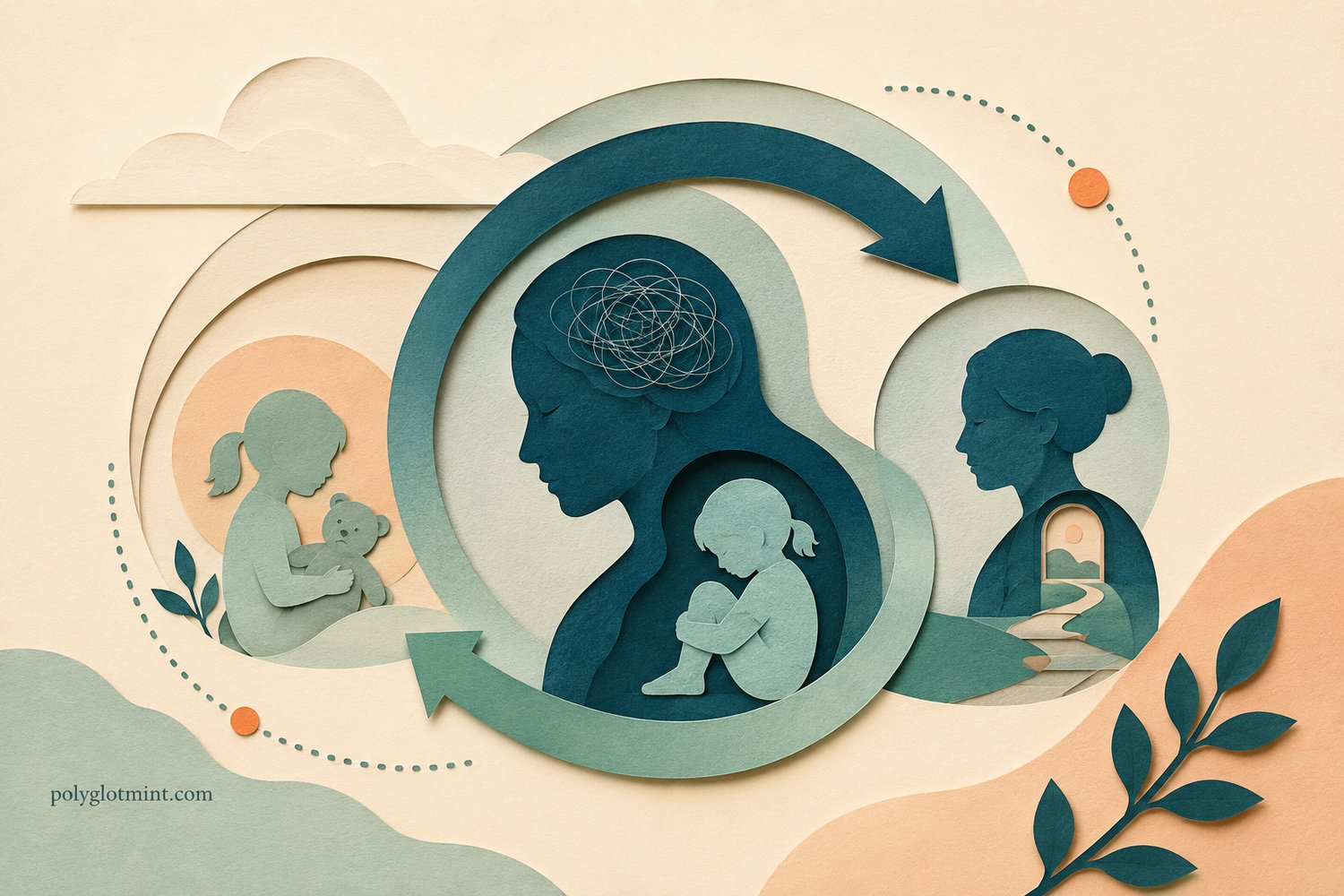
Image generated using AI under the creative direction and composition of Mint Achanaiyakul.
The Affective Regression Loop, or ARL, is a Psychomedia concept for what happens when a person repeatedly returns to an earlier emotional state and begins to organize identity around it.
It is not simply "being immature." It is not a moral failure. It is a loop.
A person enters a younger, more wounded, more helpless, more reactive, or more dependent emotional state. That state receives some form of relief, attention, recognition, protection, or belonging. Because it works, the nervous system learns to return there. Over time, the state becomes familiar. Then it becomes styled. Then it becomes identity.
In simple terms:
The Affective Regression Loop is what happens when emotional regression becomes rewarded often enough that it starts to feel like the self.
In brief
ARL describes a repeating pattern: emotional pain pulls a person backward into an earlier state; that state receives reward or relief; the reward makes the state easier to return to; repetition turns the state into identity.
What does "affective regression" mean?
"Affective" means emotional. "Regression" means a return to an earlier mode of functioning.
In ARL, the person does not necessarily return to a literal childhood memory. They return to an emotional position that feels earlier: smaller, needier, angrier, more helpless, more dramatic, more defended, or more dependent.
This can happen after trauma, chronic invalidation, abandonment, humiliation, family instability, social rejection, or repeated exposure to environments where emotional intensity is the only way to be seen.
According to Allan Schore, affect regulation develops through relationship. The nervous system learns emotional stability through repeated patterns of being seen, soothed, mirrored, and repaired. When those patterns fail, emotional states can remain under-integrated rather than fully metabolized.
ARL begins when one of those under-integrated states becomes not only activated, but rewarded.
The loop
The Affective Regression Loop has five basic movements.
Activation
Something triggers an old emotional state.
The trigger may be rejection, criticism, silence, boredom, intimacy, success, failure, comparison, or exposure to certain media. The person may not consciously know why the state appears. They only feel the shift.
The adult self narrows. The younger emotional state takes over.
Regression
The person moves into a familiar emotional position.
They may become helpless, performatively wounded, explosively angry, dependent, seductive, numb, chaotic, or childlike. The specific form depends on the person's history.
This is not always fake. In many cases, the state feels deeply real. The problem is not that the emotion is false. The problem is that the state begins to repeat without integration.
Reward
The regressed state receives something.
It may receive attention, sympathy, protection, visibility, group belonging, romantic reassurance, social media engagement, or moral permission. It may also receive internal relief: "If I stay wounded, I do not have to move."
This is where ARL becomes a loop.
A state that receives reward becomes easier to repeat.
Repetition
The person returns to the same state again and again.
At first, the state may appear only under stress. Later, it becomes a recognizable style. It may shape the person's language, humor, relationships, posting patterns, aesthetic choices, friendships, romantic dynamics, and self-description.
The person no longer only has the state. They perform from it.
Identity
Eventually, the state starts to feel like "who I am."
A person may begin to identify with woundedness, chaos, dependency, fragility, rage, victimhood, detachment, or collapse. The original emotional state becomes a character structure.
This is why ARL matters to Psychomedia: media environments can turn inner states into public identities.
Why media makes ARL stronger
In private life, emotional regression may be temporary. A person cries, withdraws, panics, collapses, or becomes reactive. Then the state passes.
Online, the same state can become visible, repeated, rewarded, archived, and aestheticized.
A post about pain may receive more attention than a post about repair. A crisis may receive more response than stability. A wounded identity may become more recognizable than a changing one.
This does not mean people should hide suffering. It means a media environment can reward the display of suffering without helping the person metabolize it.
According to James Coan and David Sbarra's Social Baseline Theory, the human brain expects social support to reduce effort and regulate risk. But if social response rewards dysregulation more than repair, the relationship between self and audience can become unstable.
The audience becomes part of the loop.
ARL is not the same as healing
Healing allows an old state to be felt, understood, integrated, and eventually loosened.
ARL keeps the old state active.
Healing says: "This happened to me, and I am learning how it shaped me." ARL says: "This state is me."
Healing increases range. ARL narrows range.
Healing creates more possible selves. ARL keeps returning to the same emotional room.
A simple example
Someone feels abandoned when a friend takes too long to reply.
The old state activates: panic, humiliation, anger, despair.
They post indirectly online. The post receives care, attention, and validation. The nervous system learns that the regressed state brings connection faster than direct communication does.
Next time, the same pattern repeats.
Over time, the person may begin to identify as someone who is always abandoned, always misunderstood, always in emotional emergency. The pain is real, but the loop prevents movement.
The original wound becomes a repeated identity performance.
Why ARL can feel comforting
ARL can be painful, but it can also feel safe.
A familiar emotional state can feel safer than an unfamiliar healthy one. Growth may require ambiguity, responsibility, grief, or new behavior. Regression offers a known script.
This is why people may resist leaving the loop. The loop is not only suffering. It is also structure.
It tells the person how to feel, how to speak, what role to occupy, and what kind of response to expect.
According to Judith Herman, trauma cannot be separated from the social context around it. Recovery requires more than private insight; it also requires conditions where truth, safety, dignity, and reconnection become possible.
ARL names what can happen when the social context rewards repetition instead.
How to recognize ARL
A pattern may be an Affective Regression Loop when:
- the same emotional state keeps returning
- the state receives attention, relief, permission, or belonging
- the person's identity becomes organized around the state
- repair feels less familiar than repetition
- the audience responds more strongly to crisis than coherence
- the person begins to lose access to other versions of themselves
The point is not to accuse people of performing pain. The point is to ask whether pain is being integrated or reinforced.
How ARL can loosen
ARL loosens when the loop is named.
A person begins to notice: "This is a state. This is not my whole self."
The next step is not shame. Shame usually drives the loop deeper.
The next step is to create new rewards for regulation, honesty, direct communication, groundedness, and agency. The nervous system needs repeated experiences where leaving the old state does not mean losing love, attention, identity, or belonging.
Repair has to become more rewarding than regression.
What ARL helps us see
The Affective Regression Loop helps explain why some trauma-shaped patterns do not disappear even when a person understands them intellectually.
A person may know the pattern. They may dislike the pattern. They may even describe the pattern accurately.
But if the pattern continues to receive reward, it continues to survive.
ARL is the point where emotional memory, social reward, media visibility, and identity formation meet.
It names a painful possibility:
Sometimes the self does not stay wounded only because of the wound. Sometimes it stays wounded because the wound became a place to live.
Achanaiyakul, M. (2026). Psychomedia 101: What Is the Affective Regression Loop? PolyglotMint.com.
References
Coan, J. A., & Sbarra, D. A. (2015). Social Baseline Theory: The Social Regulation of Risk and Effort. Current Opinion in Psychology.
Herman, J. L. (1992). Trauma and Recovery: The Aftermath of Violence. Basic Books.
Schore, A. N. (2019). Right Brain Psychotherapy. W. W. Norton.
van der Kolk, B. (2014). The Body Keeps the Score: Brain, Mind, and Body in the Healing of Trauma. Viking.